
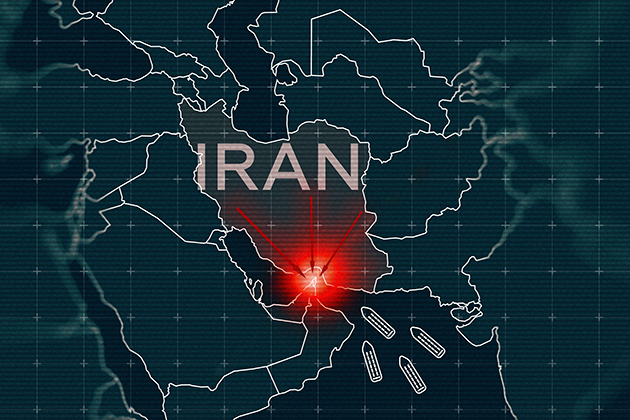
On February 28, 2026, U.S. and Israeli forces launched coordinated airstrikes against Iranian leadership, military and nuclear sites. The ensuing conflict, sanctions and treatment of the Strait of Hormuz have created issues in many areas, including shipping, trade and energy security. Cargo and vessels are not moving, and oil and gas production and supply are restricted or shut down. The advantage has shifted considerably in deals relating to trade and the supply of essential goods, particularly fuel and food.
Many parties may view getting out of their contracts as the obvious solution, either because they cannot perform for clients down the chain or because there are better prices on the market. Many people talk about concepts like “termination,” “repudiation” or “force majeure” as if they must apply during a conflict and appear to assume wars and conflicts are valid grounds for backing out of contractual obligations. However, that is unlikely to be the case.
Organizations cannot blindly assume wars and other conflicts remove the duty of performance. Rather, most parties might find they can achieve the solution needed by looking at and applying contractual terms properly.
Why the Strait of Hormuz Closure Matters
While just 104 miles long and 24 to 60 miles across, the Strait of Hormuz is essential to global trade. Currently, one side of the strait has been mined and it would take an estimated six months or more to clear, even if the conflict ended tomorrow. On the other side of the strait, there are legal issues relating to being able to transit Iranian waters due to sanctions, and demands for the payment of significant charges to ensure safe passage. On top of that, some organizations have found that insurance coverage has become extremely expensive, while others report coverage is not available at all. Already heightened by Iran’s attacks on commercial vessels over the past several years, premiums for war risks insurance for ships have further increased from 0.25% of a vessel’s value to over 1% in some cases.
Oil refineries and gas terminals have been damaged and will require extensive repairs to return to full capacity. Amid the conflict, there have been cases of supply being redirected from existing agreements to new buyers because spot prices are better. These so-called “efficient breaches” happen when sellers breach their existing agreements, even paying damages for that breach, and still make a profit because the spot prices are so good.
Essential ports cannot be reached and there is no access to the source of a very significant proportion of the world’s fuel. The knock-on effect is increasing prices, supply issues that have already led to fuel rationing in some parts of the world, and considerable uncertainty around the ability to perform contractual commitments to load and deliver cargo.
Why War and Conflict Do Not Nullify Contracts
In times of conflict, people might assume that circumstances are so extreme that one can no longer expect parties to be held to their contracts. That, however, is a false premise.
As a matter of English law, the ability to tear up a contract is known as frustration. Parties cannot elect to apply it—it is something that happens automatically where a contract has become impossible to perform because of an unforeseen event beyond the control of the parties. In this context, “impossible” does not mean “more difficult” or "more expensive.” Nothing will suffice short of the contract being literally impossible to perform.
It might seem that being unable to get to certain ports and facilities in the Gulf region constitutes impossibility. Currently, however, it is probably too soon to reach that conclusion from a legal perspective. There is likely to be a point at which it could be said that there has been such a delay as to treat performance as impossible, but that will be very fact dependent and not something the parties may see eye-to-eye on.
Making the wrong call on frustration results in a repudiatory breach, entitling the innocent party to choose between terminating the agreement and seeking damages or insisting on performance.
Getting the call on frustration right can still cause unattractive consequences as the remedy for frustration is to attempt to put the parties back in their original position as if the contract had never existed. That means money that has already changed hands might have to be repaid.
The bottom line with frustration is that you should not assume it will apply and should treat it as a last resort, especially if there are contractual remedies available. Start with the contract; do not ignore it.
Reasons and Remedies for Non-Performance
While companies cannot make any assumptions, the following provisions may provide valid reasons for non-performance of contractual obligations:
1. Sanctions
If a particular trade would violate sanctions, there is no option but to refuse to perform. Sanctions can touch a deal in many ways. For example, issues could be geographical if there are sanctioned individuals or entities involved, or payment infrastructure-related if dealing in the particular cargo is prohibited or because of the product’s intended end-use. It is crucial to pay attention to the details of the situation. If refusing to perform, the greater danger might be that the particular trade is actually permitted despite the appearance of being sanctioned, which might be due to an applicable license or simply because the precise circumstances do not meet the requirements of sanctions regulations. If concerned about the application of sanctions, obtain clear legal advice on whether the particular activity can proceed.
On the flip side, do not make assumptions about the likelihood of getting caught for a breach of sanctions. Vessels, cargo, destinations and interested parties are being watched diligently and from sources that might not be expected but have an interest in ensuring sanctions compliance and reporting breaches, such as insurers.
2. War Clauses
In some types of trade-related contracts, particularly charter parties of vessels, there may be specific provisions that amend the rights and obligations when certain “war risks” circumstances arise. These might include: the freedom to not take a vessel into an area that will expose it to war risks (or, conversely, to remove a vessel from such an area); the freedom to comply with directions and laws from any applicable authority, even where compliance would put that person or vessel at odds with contractual obligations; the freedom to take cargo to, or load at, alternative ports to those nominated in instructions; and that acting pursuant to any of the above will not constitute a breach, or deviation (in the case of an instructed voyage for a ship).
3. Safety Issues
Absent one of these specific “war risks” clauses, there may be provisions that can reliably help avoid exposure to unsafe conditions. For example, in the context of a shipping charter party, a vessel is typically only required to follow instructions that are lawful and take it to “good and safe” ports or places, where the vessel can “safely lie always afloat.”
Moreover, consider whether there are overriding duties when it comes to safety and safe operations. It is a standard provision in charter parties that the master has the ultimate say in determining whether any particular operation can be safely undertaken and is entitled to refuse to follow instructions that the master considers to be unsafe to the vessel or crew. In some cases, there may be provisions that only “reasonable” instructions need to be followed. Generally, any instructions that expose a party to unsafe conditions (and are not the purpose of the agreement) are unreasonable.
4. Force Majeure and Termination
Force majeure provisions have the advantage of effectively suspending the contract but affording the opportunity to come back to the deal and carry on if the applicable conditions are relatively short-lived.
There is no doctrine of force majeure in English law, so this is entirely a question of the language of the clause itself. Typical features are that all parties are absolved of the obligation to perform in scenarios where that performance is prevented or hindered due to certain types of unpreventable events, examples of which are usually listed. Such events could include: circumstances arising out of war; threatened acts of war or war-like operations; hostilities; terrorism; government requisition or intervention; or blockades and embargoes. The party relying on force majeure is usually required to give notice of the effects starting and ending, and there is often a right to terminate if the state of force majeure endures beyond a certain fixed period, such as 60 or 90 days.
With force majeure clauses, it is critical to pay attention to the details and make sure that all of the requirements are met. One of the main stumbling blocks is determining whether performance must be fully prevented or if hindrance is sufficient. The difference is crucial and full prevention is much harder to prove. Also take note of whether there is a specific requirement that the force majeure event was unforeseeable. Again, it is much easier to assert that an event was force majeure if foreseeability does not matter.
Termination is the more drastic option because it precludes any chance of coming back to the deal. There tend to be two forms of termination: “for convenience” and “for cause.” The latter generally requires some form of defined breach of the agreement or other defined circumstance affecting one party, such as insolvency, which allows the other party to extract itself from the deal.
Actual requisition or confiscation by a government authority or, possibly, the loss of insurance coverage might constitute “for cause” grounds that will allow termination, but it would be unusual to see acts of war or war-like operations as named grounds. In that case, the only real prospect for terminating might be for convenience. Ultimately, the circumstances might dictate that it is the best option, but termination for convenience will come with consequences, usually in the form of compensatory payments that will have to be made to the party on the receiving end of the termination. That might mitigate against the perceived value of termination.
5. Recovery of Costs and Renegotiation Options
Increased cost is frequently the driver behind a review of contracts and, often, an immediate desire to get out of them. However, your agreement might already address this. Contracts will usually establish who bears the responsibility for costs like customs or import duties, taxes, and port or transit fees. Depending on how those terms are defined or used in the contract, they may already cover any increased costs driven by conditions such as the current conflict in the Middle East.
Similarly, particularly in vessel contracts, the allocation of costs relating to safety and security measures may already be dealt with, including the right to recover increased costs where they are made necessary by the instructions of a counterparty.
Generally, the fact of a war or conflict may not alleviate obligations to pay under contracts. It is not usually an option to put a vessel off-hire when a charterer’s instructions have exposed a vessel to abnormal risks. Indeed, under provisions such as the war risks clause, the party whose instructions lead to a war risk exposure or other unsafe conditions may be obligated to reimburse its counterparty for additional costs, including additional insurance premiums and liabilities for bonuses to be paid to staff.
Particularly in long-term contracts, there may be rights to adjust or renegotiate prices under certain conditions. For trade involving Gulf of Arabia ports, these conditions may well exist now.
Unfortunately, circumstances like the current conflict in the Middle East are not new. International commercial sectors have learned to deal with them, and contract tools have been developed to protect parties as much as possible. As is so often the case in extreme circumstances, look to your contracts first for the solutions you may need and be mindful of the potential consequences of carrying on where there are increased risks. Operating where risks of conflicts exist could bring greater rewards, but also greater risk of serious consequences like physical loss or sanctions breaches.