
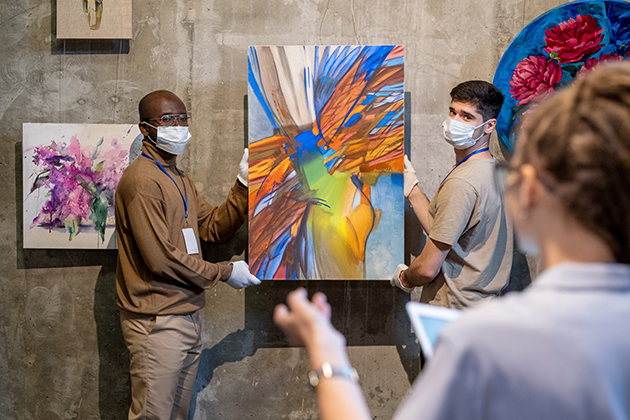
Whether on display in a gallery, office building or private collection, fine art is both a source of aesthetic beauty and a valuable investment. But unlike other investments, art is vulnerable to a host of unique risks. These range from the basic, like accidental loss or damage caused in transit, to the dynamic, like theft, intentional harm, late-detected forgery and faked provenance.
Managing risks associated with fine art requires a forward-thinking, holistic approach. In addition to insurance policies, insurers have also begun offering—or requiring—measures to identify and minimize vulnerabilities that may lead to a claim. For example, many art insurers have relationships with preferred vendors for transportation, fire safety or security to protect art against loss while in transit and when stationary. In many cases, failing to implement sufficient risk management measures, both pre- and post-loss, could jeopardize coverage and result in significant costs for art owners.
Pre-Loss Risk Management
One of the most efficient ways to reduce risk and increase the likelihood of success in any future art insurance claim is to create a plan of action ahead of time. This will likely require expert input and, increasingly, coordination with insurers. The goal is to create layers of protection between possible harm and the art.
Insurance: Fine art risk management often starts with obtaining insurance coverage to protect your investment. Review the policy to determine what it does and does not cover, including whether it has sufficient limits to repair or replace the art if it is damaged or lost. Record the contact information for the insurer and broker who sold the policy and store any documentation related to the art and its insurance in a location where it will be accessible in the event of a catastrophe or cybersecurity event. You will also need to task an individual or group with complying with insurance requirements, including conditions and subjectivities, valuations, tracing provenance, photographing and documenting the art, and notifying the insurer in the event of damage.
If the art will be loaned out, verify that the recipient has adequate protections in their insurance policies and make sure the artwork’s owner is listed as an additional insured in those policies. In addition, determine that the recipient follows best practices concerning the methods used to protect the art, including transportation, storage and display. Critically, make sure these methods also comply with the requirements of the relevant insurance policies.
These conditions should be assessed with regard to each insurance policy that could possibly cover the relevant art. In addition to art-specific insurance policies, other types of insurance may provide coverage, such as commercial property, homeowners’ insurance and umbrella policies. In certain areas, specified peril policies may be required for any causes of loss excluded on other forms, such as wildfires, earthquakes or windstorms.
Additionally, be mindful of how the art will be used and where it will be hung. Some policies protect art for certain uses in certain places, such as while displayed in a corporate office, while excluding other uses and places, such as while loaned out and displayed in a client’s home.
Further, note that fine art insurance is just one of many types of insurance that may prove useful in reducing risks. If your organization handles or manages art owned by others—gallery owners, museums, auctioneers or transportation companies—it should consider other insurance coverages that may better align with their particular circumstances. For example, liability policies that provide errors and omissions or commercial general liability coverage may be a better fit. Consider working with a broker or qualified coverage counsel to identify potential insurance solutions and create a custom risk management plan tailored to your particular circumstances.
Transportation: Damage or loss during transit makes up about 50% of all fine art insurance claims. There are several transportation-related risk management considerations art owners must address. For example, it is important to determine which company will be responsible for handling or transporting the art and understand what protections they have in place to ensure it is not damaged. Does the company specialize in fine art? Does it use climate-controlled trucks and warehouses? What protections does the warehouse have against poor climate conditions, natural disasters and theft? Has insurance been secured to address the risk that the art is damaged in transit and, if so, has the owner been added as an additional insured on the transporter’s insurance policy? It is also essential to make sure the art has been photographed and, if necessary or required by the insurance policies, that a that a condition report has been prepared prior to transportation.
Natural disasters: When it comes to risk from natural disasters, owners must carefully consider where the art will be stored and secondary locations in case of a disaster. How is the storage location protected against dangers from fire (smoke, heat and burning); flooding (water and humidity); and other natural disasters (wind or structural damage)? If a disaster occurs, will the art be evacuated, left where it is, or relocated to a safe or similarly protected space nearby? Secondary storage locations should have climate control, access to backup power in in case of electrical outage, and sufficient security systems in the event of pre- or post-disaster looting.
Damage, repair and restoration: Before any incident occurs, identify a vendor that will handle any repair or restoration in the event of damage. This may involve multiple vendors depending on the type of art or nature of the damage, such as damage to the frame or art itself, and damage from water, heat or contact. As with any transportation scenario, you will need to determine how to safely transport the art to that vendor, whether the vendor is insured for the type of work they will perform, if your insurance policy has sufficient limits to pay for any damage to the art, and if you have been added as an additional insured on the vendor’s insurance policies. Whether it is paintings, drawings, sculptures, digital or digitally-stored art like NFTs, or instructions for performance pieces, different types of art require different methods of protection. Set aside time to review each and every piece of art under your aegis to patch any potential gaps in your risk management plan.
In recent years, insurers have begun working with policyholders to identify and address vulnerabilities that may result in a claim. Some insurers work with brokers and other service providers to offer a full suite of tools to reduce risk. These tools may include mapping software to identify fire and flooding threats, security and monitoring services, and assistance developing lockdown or evacuation plans for high-value investments. In fact, some insurers may require that policyholders take certain steps as preconditions to granting coverage. The insurer or broker may also be a valuable resource for locating vendors qualified to mitigate risk or respond to loss. Regardless of recommendation, be sure to investigate the qualifications of any potential vendors suggested.
Post-Loss Considerations
If a loss occurs, the most important steps are to mitigate the loss by avoiding additional damage, notify your insurers as soon as possible, and thoroughly document the loss.
These steps can often be taken simultaneously. For example, if a painting drops in transit, take numerous photos and, if feasible, avoid moving the painting until any insurers have been notified and possibly given the opportunity to inspect the painting. Some policies also require that condition reports be completed before an asset is moved. If the policy requires a condition report, make sure one is completed as quickly as possible and provided to the insurer before the painting is moved. Of course, taking steps to protect the art against additional damage may need to come first, such as moving a painting indoors if it was dropped while outside.
In a catastrophic loss scenario like a fire or flood, careful documentation of the loss may yield to urgency. In that case, do your best to keep all insurers informed and create whatever documentation is possible to help prove the amount of damage later, such as photographs, videos and notes. In addition, ensure that any retained vendors understand the importance of documenting the loss and any actions that may affect the art, including transport and repair.
At this juncture, given the potentially serious consequences for failing to comply with insurance policy provisions, it may make sense to retain coverage counsel to coordinate responses, assess coverage, and communicate with the insurers and vendors.
A key early decision is whether to claim a partial or total loss. A partial loss means the art can be repaired or restored, while a total loss means it cannot. Even if the art could theoretically be repaired, you may want to consider claiming a total loss, meaning that repairs are not worth the amount they would cost or the value they would restore to the art. The insurance policy may contain language about how and under what circumstances you can claim a partial or total loss.
The policy may also contain language about how the art will be valued. Some policies require art to be scheduled, meaning that the insured must obtain a valuation for particular pieces of art and submit the valuation to the insurer to be appended to the policy. Other policies may require the insurer to pay the market value of the art and detail how an appraiser will be retained to determine that value. For example, the policy may provide that each party can select an independent appraiser and that differences in valuation will be resolved by a neutral arbitrator. Make sure to carefully read the policy to determine how art will be valued and retain experts to make sure the art is appropriately assessed prior to a loss. This may also impact policy limits and the premium, so it is likely advantageous to obtain at least an initial valuation in advance.
Following the loss and throughout the valuation process, maintain frequent contact with your insurers and, if possible, involve them in decision-making processes. At the very least, make sure to give insurers notice of important updates as soon as possible and an opportunity to weigh in on next steps. If there is an impasse on how to respond to a loss, the broker who sold the policy or any coverage counsel retained.
Managing risks associated with fine art requires a comprehensive approach. Before disaster strikes, it is important to think through potential sources of harm and how the art will be protected wherever it is stored or displayed and while in transit. Insurance is a valuable component of a risk management strategy, and insurer requirements may affect other components of the risk management plan. For that reason, careful coordination with insurers, brokers, experts, vendors and qualified coverage counsel will result in the greatest protection.