
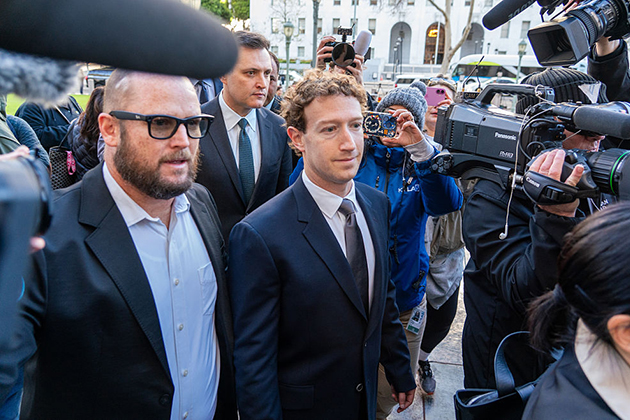
In late March, a jury in California held Meta and YouTube liable for millions of dollars in damages related to the allegedly addictive design of its social media platforms, Facebook and Instagram—a decision Meta has vowed to appeal. However, an earlier, separate decision related to that case is garnering attention for its insurance coverage implications.
On February 27, the Delaware Superior Court issued its ruling in Hartford Casualty Insurance Co. v. Instagram LLC, a case brought against Meta—the parent company of Instagram and Facebook—and multiple insurance companies. The court ruled in favor of the insurers, finding they could deny coverage for Meta’s defense costs for addiction-related claims, including claims pleaded as negligence. If upheld, the ruling could allow more than 20 insurers, including units of The Hartford and Chubb Ltd., to avoid funding Meta’s defense in the social media addiction multi-district litigation pending in the Northern District of California, as well as related state court actions.
The Delaware decision represents a significant, insurer-favorable interpretation of California law. Critics argue that it distorts policyholders’ reasonable expectations of coverage and, if followed elsewhere, could significantly narrow the availability of defense coverage for companies facing addiction-related claims.
The underlying litigation involves thousands of lawsuits—including the recent California case—alleging that Meta intentionally designed its platforms with features that lead to compulsive use and, as a result, addiction. This includes social media features like infinite scrolling, algorithmic recommendations, frequent notifications and videos that play automatically, keeping users constantly engaged. The suits claim this has caused addiction and other harms such as depression, eating disorders and self-harm, particularly to minors. Meta sought defense coverage from its liability insurers to address the suits, but the insurers sued, seeking a declaration that they owed no duty to cover the cost of defending the addiction claims.
Companies should particularly take notice if they rely on engagement-driven design to improve user experience and deliver value, including algorithms, notifications and reward systems should take notice. This ruling means that commercial liability insurers can deny claims outright in such cases and could increase the likelihood of protracted coverage disputes.
Although the Delaware ruling arises from claims against a social media platform, its implications may not be limited to technology companies. Social media platforms, gaming companies, streaming services, consumer packaged goods companies, retailers and digital investment platforms all face potential exposure. Risk managers across these industries need to reassess their insurance coverage, prepare for coverage disputes and plan for self-funded defenses.
Uncertainty about the Duty to Defend
Under established California law, the duty to defend is broad and triggered by any potential for coverage based on the allegations in the complaint. But the Delaware court took a different approach, characterizing the conduct as intentional despite the fact that numerous claims were pleaded as negligence.
This ruling may lead other courts to focus on plaintiffs’ pleading language alleging engineered addictive algorithms while giving less weight to the “potential for coverage” standard. If plaintiffs allege that design features are addictive by intentional design, even while asserting negligence, companies may face aggressive coverage disputes over whether there is an accident or occurrence that triggers coverage. If broadly adopted, this decision could call into question the assumption that negligence claims trigger a defense.
Practical Implications
Coverage denials create a new precedent and interpretation of California law and the practical implications can be significant. Companies facing engagement-driven product litigation may encounter immediate resistance from insurers when seeking defense coverage. Insurers that once funded or reimbursed defense costs may take adversarial positions, forcing companies to absorb substantial legal costs at the outset of litigation.
Depending on policy language and jurisdiction, insurers may seek reimbursement from their insureds of defense costs already paid. That prospect raises questions for corporate leadership and risk managers about the reliability of existing insurance programs.
A Broader Litigation Trend
The Hartford v. Meta decision could be read to extend beyond social media companies to any business that monetizes user engagement. Indeed, in its opposition brief, Meta warned that the insurers’ theory would mean that “any ‘deliberate choice’ that eventually results in unintended or unforeseeable injury voids insurance” and that such allegations “equally apply to any service provider with the rational, commonplace goal of increasing its user engagement.”
This reasoning could be applied to deliberate design choices like loot boxes, daily login rewards and algorithmic matchmaking systems designed to increase user engagement. Plaintiffs are framing claims around intentional product design and engagement strategies, and insurers are responding by arguing that such conduct falls outside the scope of accidental occurrences.
Retailers with loyalty apps, investment platforms with gamified trading interfaces, and streaming services that optimize for binge-watching are potentially vulnerable, and manufacturers of various consumer goods could face addictive design claims about their products’ creation and purpose. Any company whose products are alleged to be designed to drive sustained use or habit formation could face similar coverage challenges.
What Companies Can Do Now
In the near term, companies could experience defense denials, reservation-of-rights letters citing intentional conduct, and demands to reimburse defense costs already paid.
These issues are likely to surface quickly at the highest levels of organizations. Boards, CFOs and general counsel should ask: Could we be forced to repay defense costs? Does this decision apply to us? Will the ruling hold up on appeal? What is our risk management team doing about it right now?
To provide clarity, risk managers can:
- Collect and review policies: Closely review policies in their entirety to determine the scope of coverage, including endorsements and write-backs. Focus on intentional acts, expected or intended injury, and product-related exclusions.
- Prepare for coverage disputes: Establish protocols for denials and reimbursement demands, and develop plans to push back. It is important to control the narrative early, as the way a claim is presented to insurers can materially affect coverage outcomes.
- Plan for self-funded defense: Plan for funding defense costs initially, including carefully tracking and allocating defense costs while preserving the right to seek reimbursement.
- Engage brokers and carriers: Open a dialogue with your brokers and underwriters and discuss ways to preserve coverage.
- Align internally: Coordinate across legal, risk and finance teams in order to answer inevitable questions from senior leadership.
While Meta’s motion for reconsideration is pending and the precedential value of the ruling is uncertain, the Delaware decision is creating new considerations for companies. Even if the decision is narrowed or overturned on appeal, insurers are already invoking its reasoning to deny defense costs. Companies should prepare now for more aggressive coverage disputes and the real possibility of self-funded defenses.