
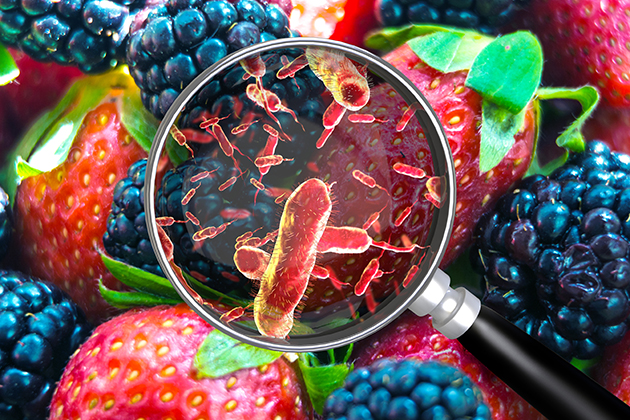
Food safety is under constant scrutiny because of its direct impact on public health. As of May 2026, the U.S. Food and Drug Administration (FDA) has issued over 900 food and beverage recalls over the last decade for reasons ranging from potential foodborne illness to undeclared allergens. In addition, some consumers are worried about food additives and contaminants, such as preservatives, microplastics and pesticides.
In recognition of these issues, in October 2024, the FDA launched the Human Foods Program (HFP) with a mission “to protect and promote the health and wellness of the American public through science-based approaches to prevent foodborne illness, reduce diet-related chronic disease and ensure chemicals in food are safe,” consolidating the Center for Food Safety and Applied Nutrition, the Office of Food Policy and Response, and some functions within the Office of Regulatory Affairs into one organization.
The HFP recently announced that one of its key priorities for 2026 is a focus on microbiological food safety “advancing strategies to prevent pathogen-related foodborne illness in close collaboration with other regulatory agencies, states, industry and other stakeholders.” The HFP has said that it will be “relying on state partners to carry out more routine food safety systems inspections, while still maintaining FDA’s rigorous national standards.”
As more oversight is delegated to state authorities, the food industry is likely to face heightened scrutiny on a more local level. Risk managers need to stay up to date on the HFP’s priorities to ensure their organization maintains a similar focus and remains compliant. From farm or factory to table, even the best-managed operations in the food value chain can encounter contaminants from bacteria like E. coli and Salmonella, viruses or parasites, as well as chemicals and physical hazards. Insurance carriers, brokers and risk managers recognize the possibilities and should focus on identifying, controlling and mitigating food safety risks.
Food Safety Standards
Food safety standards have evolved beyond the status quo. Today, the general expectation is that agribusinesses should aim to exceed the minimum food safety requirements set by regulators such as the FDA and the U.S. Department of Agriculture (USDA), as well as state agencies. Insureds need to acknowledge that food safety risks can never be erased entirely, even after following established industry protocols and standards.
Contaminants like E. coli, salmonella and listeria can be latent and difficult to detect and trace, despite thorough sampling and product tracing. In one recent case, a ready-to-eat food processor followed sanitation standard operating procedures, conducted routine environmental monitoring, and passed third-party audits, yet listeria was later found in their finished products. The bacteria had harbored in a hard-to-clean drain area that tested negative during prior swabbing. This triggered a recall that led to product loss, business interruption and downstream distributor claims. Despite good-faith attempts, sometimes environmental pathogens can evade standard controls.
When it comes to food safety, there are a number of best practices and regulatory requirements that food companies need to follow, depending on the size and scope of the operation. Food safety does not depend on a single control, but a system of interdependent practices that must work together to protect public health and manage risk. For example:
- Strong sanitation and good manufacturing practices programs (GMP) are essential to control environmental and cross-contamination risks, but they must be consistently executed, verified and documented to be effective.
- Temperature control across storage, processing and transportation is critical for preventing pathogen growth, requiring continuous monitoring and clear corrective actions when deviations occur.
- A comprehensive hazard analysis and critical control points program ensures that biological, chemical and physical risks are identified and managed. The program must be regularly updated as products, processes or suppliers change.
- Effective allergen management, supplier oversight and traceability systems help prevent labeling errors and enable rapid response when issues arise, reducing the scope and cost of recalls.
- A complete and accurate recordkeeping system is important to maintain consistency and ensure unwavering compliance.
Biosecurity Risks
Biosecurity standards in agricultural operations have tightened in recent years, partly in response to the COVID-19 pandemic and greater public scrutiny. Consumers are generally more educated on public health concerns and the potential for contamination.
Today, access to facilities is often highly restricted for both external partners and internal staff. Even within a single location, employees may be limited to specific areas to prevent cross-contamination. For example, a poultry producer might only allow select personnel into the hen houses, while other workers are restricted solely to the egg-processing plant.
These biosecurity measures make it difficult for risk control specialists to conduct on-site evaluations. Traditionally, teams could walk through buildings, enter processing facilities, observe workflows and directly assess how products were handled. Those firsthand insights are harder to obtain with access now heavily controlled. Even when an insured is cooperative, the administrative burden is significant. Insureds often have to file extensive paperwork and secure multiple permits from various agencies to allow a single site visit.
This results in longer lead times because the paperwork and internal approvals required for visits to certain facilities can delay efforts to gain interior access for risk control inspections. These delays may contribute to gaps in operational knowledge, which can complicate underwriting and risk evaluation. Risk control professionals may also be required to complete additional sanitation and prevention steps before being allowed inside a facility. In some cases, it may even be necessary to rely on technology that enables a virtual visit to the operations, reducing contamination concerns associated with physical entry.
Emerging Risks in Agribusiness
Like many industries, agribusiness faces some of the same risks as other industries, such as the increased use of chemicals as well as artificial intelligence (AI). Because the sector operates at the intersection of food production, environmental exposure and public health, these risks often carry heightened regulatory scrutiny, biological variability and long-term reputational consequences.
Unlike traditional manufacturing, agribusiness risks are influenced by living systems, weather patterns and events, as well as long supply chains that extend from basic farm inputs to consumer food products on the table. This interconnected ecosystem means that emerging risks can have broader downstream impacts than in many other industries.
One emerging risk for agribusinesses is the prevalence of PFAS (per- and polyfluoroalkyl substances) in food products. Sometimes referred to as “forever chemicals," PFAS are synthetic chemicals used in many consumer and industrial products for their resistance to heat, water and oil. True to the name, they are difficult to break down and they stay in the environment for long periods of time. Researchers have yet to determine what impact PFAS have on people and the environment, but they have been linked publicly to various human health risks.
Recently, concerns have grown among farmers regarding PFAS in groundwater or areas where livestock are raised. If animals ingest these substances, there is a potential for downstream contamination in food products. One reported example involved dairy operations that drew water from private wells that were later found to contain PFAS, which are often linked to firefighting foam used nearby, industrial activity or land-applied biosolids. Cows consuming the contaminated water accumulated PFAS in their systems, leading to elevated levels of PFAS in milk. In some cases, milk shipments were rejected or farms were forced to depopulate herds, despite making no changes to feed, housing or animal care practices.
PFAS present a unique challenge for insurers and risk managers. Their prevalence across various materials and the uncertainty around exposure and liability have led carriers to exclude them from standard general liability and farm liability policies. Coverage is only available through specialized, stand-alone environmental liability or pollution liability policies, which are often expensive and limited by strict coverage terms and conditions.
Agribusiness clients can stay ahead of PFAS risks by taking several proactive steps, including:
- Increasing awareness of potential exposure pathways
- Conducting proactive testing and monitoring where higher‑risk areas or specific concerns are identified
- Strengthening supplier and input controls
- Enhancing traceability and documentation
AI, Analytics and Automation in the Food Sector
AI is being adopted across the value chain to enable higher yields and quality, reduce input costs and waste, strengthen food safety and traceability, and improve resilience to climate and market volatility. The use of AI can also help manage some traditional food safety risks by establishing more clear consistency and accountability across the industry.
In crop production, AI can optimize irrigation and fertilizer application and monitor crop health through drones, sensors and computer vision. This can not only increase efficiency and output but also provide consistency and credibility in ensuring food safety controls are in place.
Beyond production, AI is increasingly used for quality control, packaging inspection, supply‑chain visibility, demand forecasting and logistics optimization. Ultimately, this could result in producing higher-quality outputs with reduced risk of contamination. These technologies can help reduce waste, strengthen food safety and improve operational efficiency from farm to consumer.
Wearable sensors and computer vision are also being used to monitor animal health and welfare in livestock production, while predictive analytics are being used to adjust feed composition based on animal growth rates, health and market conditions. By improving herd health and reducing the potential for illness, the need for medications can be reduced, thus mitigating the risk of contamination from applied treatments.
While specific claim trends related to AI have not yet emerged, there are many use cases for these technologies in food safety, but agribusinesses should remain aware of the potential risks as well. For example, computers can experience system failures or be compromised by bad actors. As technology becomes embedded in critical food system processes, cybersecurity will play a growing role in risk management across the food chain.
Functions of Product Recall Insurance
Across the food chain, one of the most important insurance coverages is product recall insurance. A single recall can be devastating for an agribusiness’s finances and reputation, so it is critical to ensure the organization has the right safeguards in place.
The most comprehensive product recall insurance policies are available in the excess and surplus lines market via carriers or wholesale brokers that specialize in this coverage and related services. Product recall insurance helps offset both the operational expenses of a recall and the costs involved in restoring the brand. It can cover a broad range of expenses, including recall advertising; shipping and collection; product destruction or disposal; product replacement or repair; distributor and retailer fees; business interruption; and reputation management.
Among standard carriers, coverage may be narrower. Some offer a more limited option in the form of product withdrawal expense coverage, which can help to mitigate recall costs. This should be supported by product liability insurance to help cover legal fees and certain claims related to product failures that result in bodily injury or property damages. This coverage distinction matters when evaluating an organization’s recall exposure. Large producers with complex supply chains may require broader recall capabilities, while smaller or less complex operations might rely on withdrawal expense coverage, depending on their risk profile.
As emerging threats like PFAS and AI reshape the food safety landscape, risk managers and insurers should stay focused on the fundamentals. Strong manufacturing practices, hazard analysis, traceability and recall management are central to food safety risk management.
Food safety is a shared responsibility across the supply chain, from producers and processors to distributors and consumers. By creating a culture of accountability and clear communication, food industry companies can strengthen their risk management practices and reduce the risk of costly and harmful food safety crises.